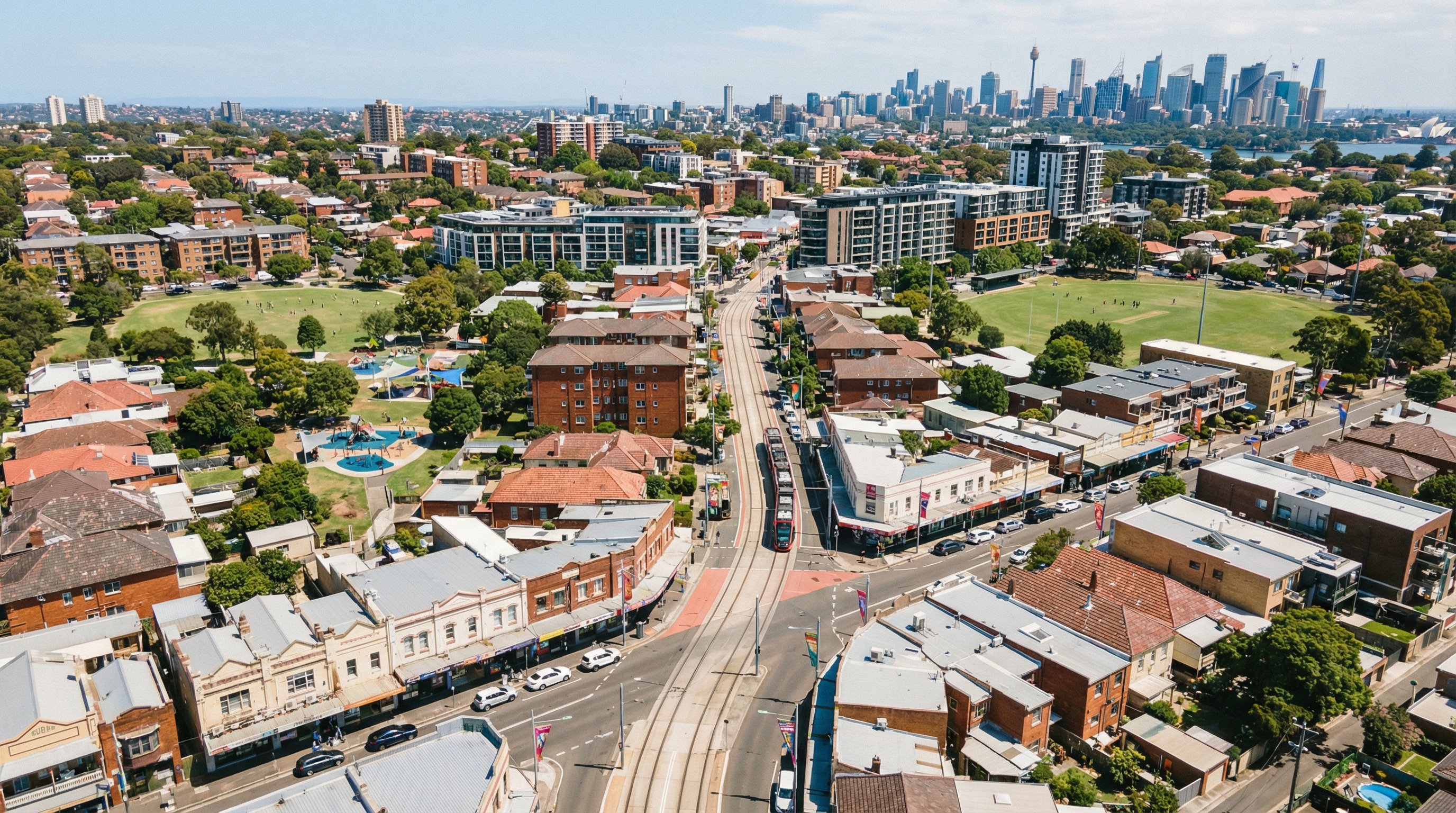
Love Livin' Dulwich Hill: A Comprehensive Suburb Guide
Dulwich Hill, NSW 2203, nestled in Sydney's vibrant Inner West, offers a unique blend of urban convenience and community charm. Known for its heritage homes, leafy streets, and thriving cafe culture, it attracts a diverse mix of professionals, families, and creatives [3]. This guide provides a comprehensive overview of Dulwich Hill, covering its property market, lifestyle, education, transport, demographics, and investment potential.
Property Market Overview
The property market in Dulwich Hill has shown consistent growth, making it an attractive prospect for both homeowners and investors. As of January 2026, the median property price for a house in Dulwich Hill is $2,442,000, with an annual capital growth of 7.58%. Over the past 12 months, there were 102 house sales, with properties typically spending 53 days on the market [1].
For units, the median price stands at $912,000. While houses have seen a quarterly growth of 7.11%, units experienced a more modest quarterly growth of 1.05% [1].
| Key Market Data (12 Months) | House | Unit |
|---|---|---|
| Median Price | $2,442,000 | $912,000 |
| Quarterly Growth | +7.11% | +1.05% |
| 12-Month Growth | +7.58% | -2.20% |
| Average Annual Growth | +8.69% | +3.58% |
| Number of Sales | 102 | 163 |
| Avg. Days on Market | 53 | 28 |
Lifestyle and Amenities
Dulwich Hill boasts a vibrant lifestyle with an abundance of cafes, restaurants, and local shops. The suburb is experiencing a gentrification of its shopping strip, with trendy cafes, pizza bars, and dessert spots emerging [2]. Residents appreciate the easy access to local services, including dentists, GPs, and an IGA supermarket [2]. While there isn't a Coles or Woolworths within the immediate vicinity, Marrickville, with its larger supermarkets and gyms, is a short distance away [2].
The suburb is also rich in green spaces, with 10 parks covering nearly 5.5% of its total area. The Cooks River nearby offers a pleasant environment for jogging and cycling [1, 2]. The Flour Mill markets are another popular local attraction [2].
Schools and Education Facilities
Dulwich Hill is well-served by educational institutions. Dulwich Hill Public School is a comprehensive coeducational primary school catering to Kindergarten to Year 6 students. The school serves a diverse, socio-economic, and multicultural community [2]. There are numerous other schools in and around the 2203 postcode, offering a range of options for families [2].
Transport and Accessibility to CBD
Dulwich Hill offers excellent connectivity to the Sydney CBD and surrounding areas. The suburb is well-serviced by public transport, including train and bus services, and the light rail [2]. The journey to the city by train can take approximately 30 minutes during peak hours [2]. The light rail line provides quick access to various parts of the Inner West [2]. While some residents note occasional aircraft noise, this is a common characteristic of many Inner West suburbs due to proximity to the airport [2].
Demographics and Community Vibe
Dulwich Hill's population in 2021 was 14,046, showing a modest growth of 2.4% since 2016. The predominant age group is 30-39 years. Households are primarily childless couples, with many repaying over $4000 per month on mortgage repayments. A significant portion of the population works in professional occupations. In 2021, 52.10% of homes were owner-occupied [1].
The community vibe in Dulwich Hill is often described as friendly and village-like, with a strong neighbourly spirit. It's considered family-friendly, with many retirees and young families residing in the area [2].
Investment Outlook and Rental Yields
Dulwich Hill presents a promising investment outlook. Houses currently offer a gross rental yield of 2.22% with a median weekly rent of $800. Units provide a higher gross rental yield of 3.91% with a median weekly rent of $680 [1]. The consistent capital growth and strong rental demand make Dulwich Hill an attractive option for property investors.
References
Ready to Make Your Move?
Get expert guidance and market insights to help you buy smarter in your target suburb.
Get Started with Homeowner